The KODAK Slide N Scan Max is a home film scanner for turning selected slides and color or black-and-white negatives into digital files.
This kodak slide n scan max review looks at its direct SD-card saving, supported formats, and high-resolution output for people organizing a personal photo archive.
Slide N Scan Max Review Summary
The quick verdict
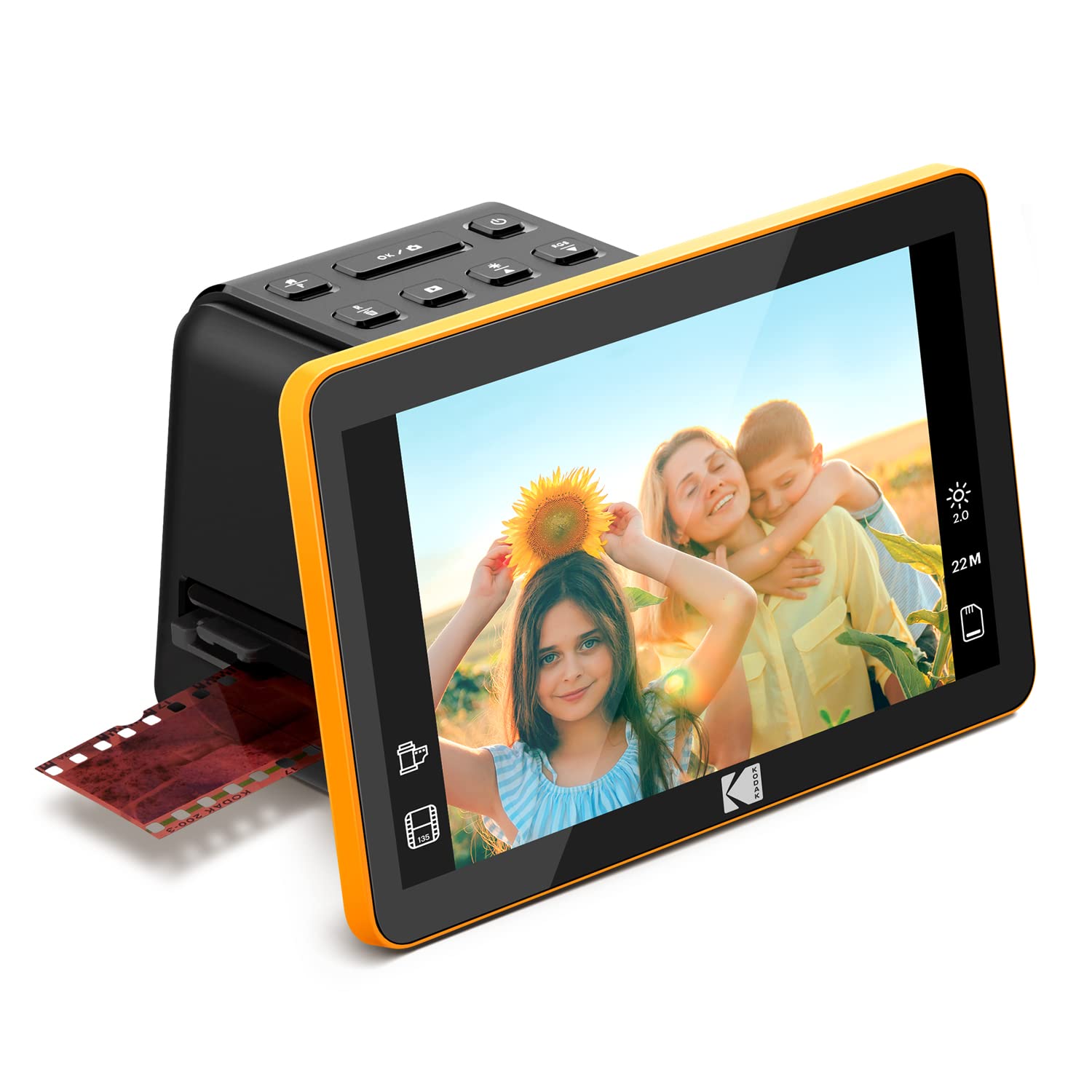
1,000+ ratings
Read Amazon ReviewsKODAK Slide N Scan Max
A practical choice for home archivists who want to digitize several common film formats and save scans directly to an SD card.
- Supports 135, 110, and 126 film formats, including slides and color or black-and-white negatives.
- Saves scans directly to SD or SDHC cards with capacities up to 32GB.
- Uses a smooth-moving tray intended to feed film without constant repositioning.
- Includes one-touch options to resize, convert, and adjust images.

Pros
- Direct SD-card saving supports a straightforward, computer-free scanning workflow.
- The supported 135, 110, and 126 formats accommodate more than one common film size.
Consider before buying
- The supported formats are specific; check your film and slide sizes before choosing this scanner.
- The SD and SDHC card capacity is limited to up to 32GB, which may mean transferring files or changing cards during a large project.
Read the full review summary
The Slide N Scan Max combines a smooth-moving feed tray, one-touch image adjustments, and direct saving to SD or SDHC cards up to 32GB.
Its stated support for 135, 110, and 126 film gives it a useful range for households with older formats, while the compact design can suit a desk or craft area.
This model is most appealing if you want a self-contained scanning workflow and can work within its listed film formats and card capacity.
The product details also cite a 13MP CMOS sensor, output up to 4208 × 3120 with interpolation, a USB connection, and a one-year limited warranty; buyers should consider how those features fit their archive and computer setup.
The buying factors
Slide N Scan Max Scorecard
Editorial scores reflect listed features and buyer fit; they are not laboratory measurements or customer ratings.
Film format flexibility
The listed 135, 110, and 126 formats cover several common legacy film types, including slides and color or black-and-white negatives.
Standalone saving
Direct saving to SD or SDHC cards up to 32GB can keep a basic scanning session independent of a computer.
Feed convenience
The smooth-moving tray is designed to feed film without constant repositioning, which may help when digitizing a batch.
Image adjustment simplicity
One-touch resize, conversion, and adjustment features aim to keep basic edits accessible without complex menus.
Output detail options
The stated maximum output is 4208 × 3120, produced from a 13MP CMOS sensor with 22MP interpolation.
Setup clarity
USB connectivity and a Windows 7 minimum requirement are listed, so buyers should confirm compatibility with their current computer if they plan to connect it.
Key Features and Specifications of Slide N Scan Max
- Supports 135, 110, and 126 film formats, including slides and color or black-and-white negatives.
- Saves scans directly to SD or SDHC cards with capacities up to 32GB.
- Uses a smooth-moving tray intended to feed film without constant repositioning.
- Includes one-touch options to resize, convert, and adjust images.
- Combines a 13MP CMOS sensor with 22MP interpolation for output up to 4208 × 3120.
- Connects by USB; the listed minimum system requirement is Windows 7.
- Measures 6.69 × 5.35 × 4.45 inches and weighs 16 ounces; the warranty is one year limited.
Pros and Cons of Slide N Scan Max
Pros
- Direct SD-card saving supports a straightforward, computer-free scanning workflow.
- The supported 135, 110, and 126 formats accommodate more than one common film size.
- A moving feed tray is designed to reduce the need to reposition film repeatedly.
- One-touch editing keeps basic resizing and image adjustments accessible.
Consider before buying
- The supported formats are specific; check your film and slide sizes before choosing this scanner.
- The SD and SDHC card capacity is limited to up to 32GB, which may mean transferring files or changing cards during a large project.
- Output up to 4208 × 3120 uses interpolation, so buyers prioritizing native capture detail should weigh that distinction.
- The listed minimum system requirement is Windows 7; confirm compatibility with your intended computer and workflow before relying on USB connection.
Who Should Buy Slide N Scan Max?
Good fit
Consider the Slide N Scan Max if you are sorting a family collection made up of 135, 110, or 126 slides and negatives and want to save scans directly to a memory card.
The feed tray and one-touch adjustments are geared toward approachable home archiving, especially when you would rather keep the process simple than build a computer-centered workflow.
It may also suit a small workspace: the listed dimensions are compact, and the unit weighs 16 ounces.
Before buying, identify the film formats in your boxes, check whether your SD or SDHC card is within the supported capacity, and confirm that the listed Windows requirement fits any computer connection you plan to use.
Who should skip it
Look elsewhere if your collection includes film formats beyond 135, 110, and 126, or if you need a workflow built around a larger card capacity. Verify those requirements against your archive before deciding.
This is not the right fit if your priority is a native-resolution capture specification rather than an output figure that uses interpolation. Consider whether the scanner's stated output and intended home use match your preservation goals.
How the Slide N Scan Max Fits a Home Film Archive
Formats determine whether it fits your boxes
Film format support is often the first practical filter for a home scanner.
The Slide N Scan Max lists 135, 110, and 126 formats and covers both slides and color or black-and-white negatives, so checking a few frames from the collection before purchase can establish whether the scanner addresses the material you actually own.
Direct card saving shapes the workflow
Saving directly to SD or SDHC cards up to 32GB makes it possible to scan without keeping a computer connected throughout the process.
That can simplify a temporary scanning station, though a large archive may require transferring files or organizing multiple cards as the project grows.
Read the resolution claim in context
The scanner pairs a 13MP CMOS sensor with 22MP interpolation and lists output up to 4208 × 3120.
Since the maximum output incorporates interpolation, buyers who care about how much original detail is captured should treat that distinction as part of their decision and consider the intended use of the resulting files.
A simpler editing approach has a defined scope
One-touch resizing, conversion, and adjustment may make routine correction less intimidating for occasional users.
The product details emphasize simple controls rather than a complex editing workflow, so decide whether those basic options match the level of control you expect when preparing scans for sharing or keeping.
Alternatives to Slide N Scan Max
Slide & Negative Scanners alternative
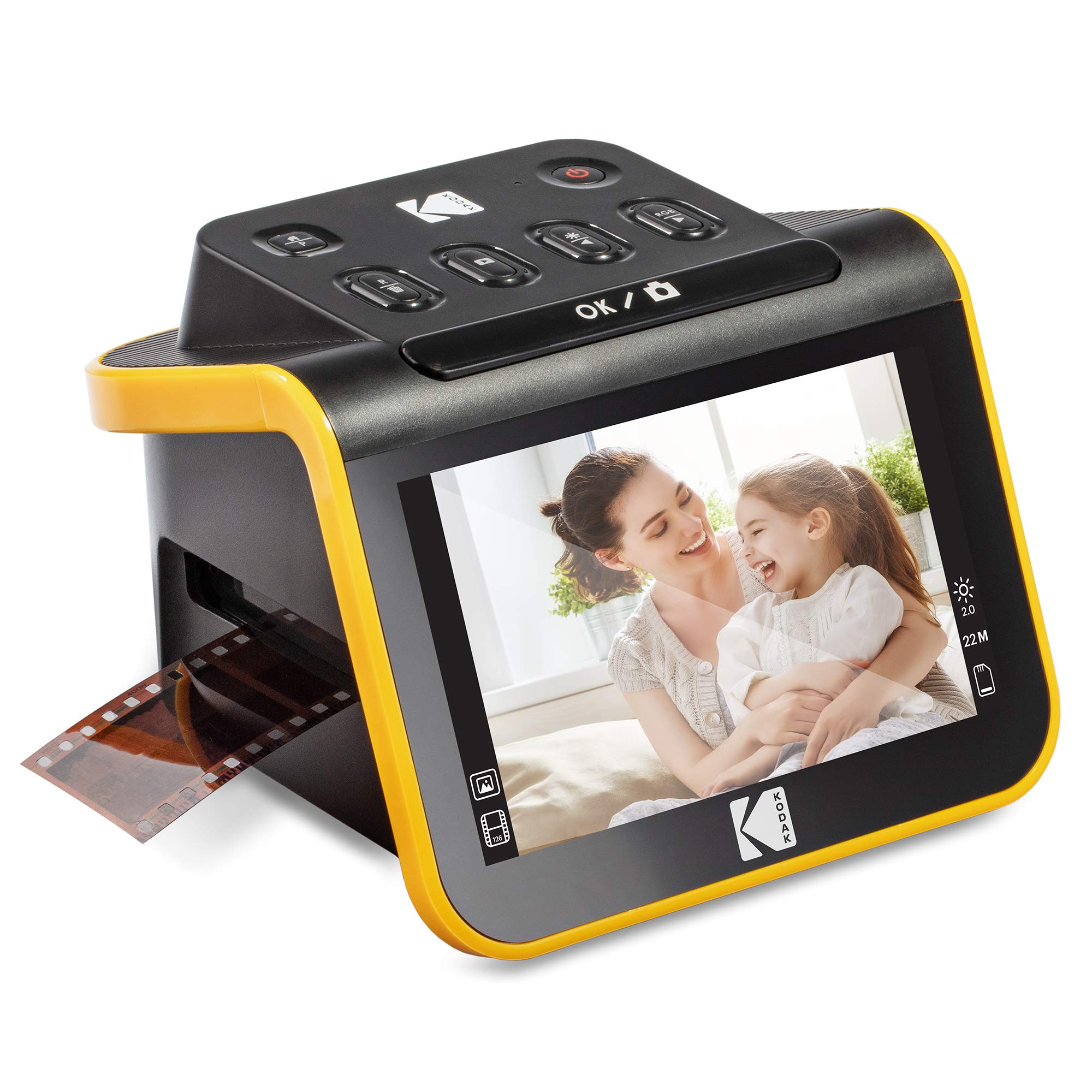
12,000+ ratings
Read Amazon ReviewsKODAK Slide N Scan Film & Slide Scanner
Choose the Slide N Scan if seeing and browsing images on a built-in screen is valuable to your workflow.
The Max remains a reasonable fit when its moving tray and direct card-saving approach are the priorities; compare the included display and accessory details against how you plan to scan.
- This Slide N Scan model also supports 135, 110, and 126 film and saves to SD or SDHC cards up to 32GB.
- It adds a 5-inch LCD with gallery mode, and its included accessories list film inserts, a cleaning brush, USB and HDMI cables.
- The Slide N Scan Max supports 135, 110, and 126 film and saves directly to SD or SDHC cards up to 32GB, with output up to 4208 × 3120 using interpolation.
Slide & Negative Scanners alternative
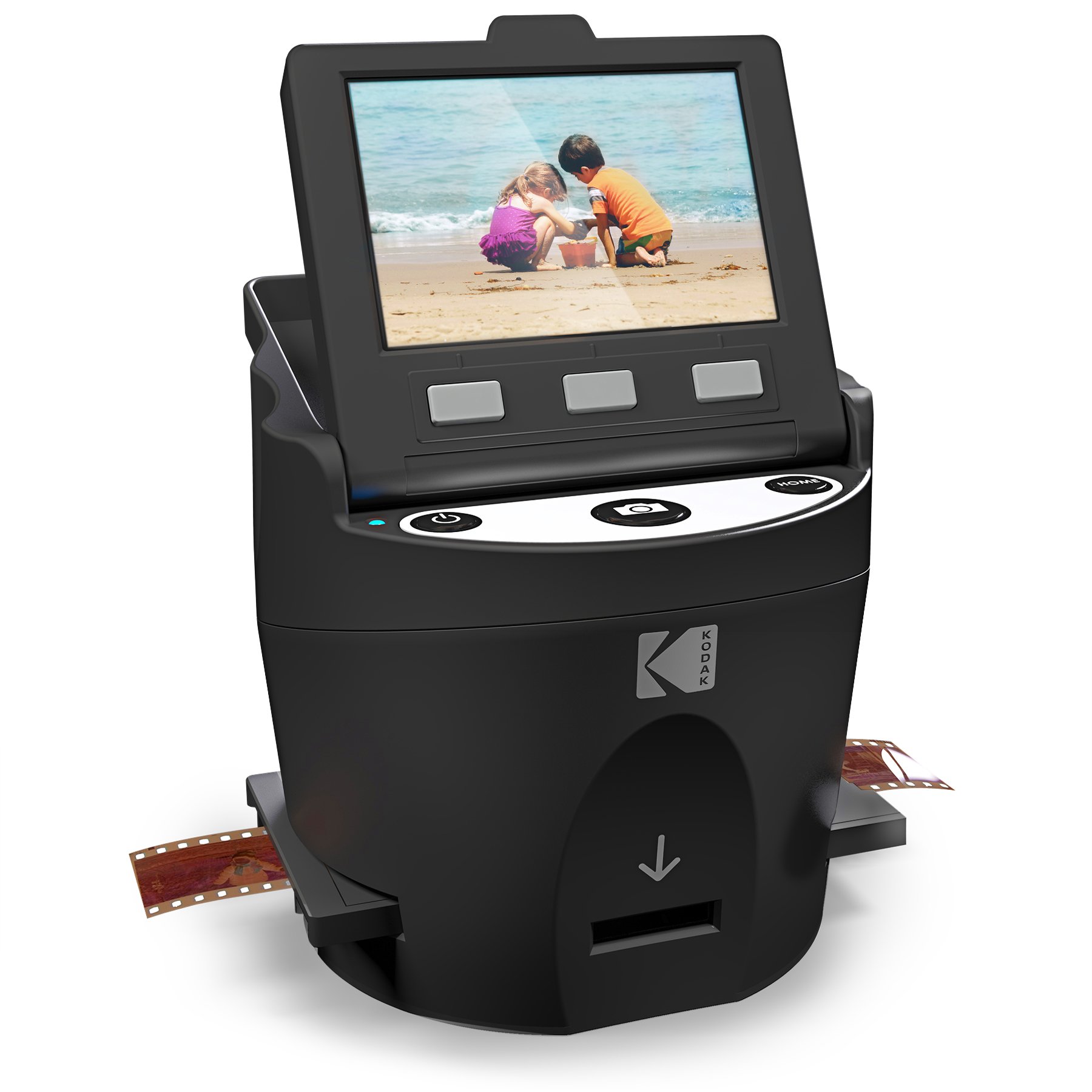
11,000+ ratings
Read Amazon ReviewsKODAK SCANZA Digital Film & Slide Scanner
The SCANZA may better suit an archive that includes Super 8 or 8mm film, or a buyer who wants its adjustable display and larger stated card capacity.
The Slide N Scan Max has a narrower listed format range but covers 135, 110, and 126 film with its moving tray and direct SD-card workflow.
- The SCANZA supports 35mm, 126, 110, Super 8, and 8mm film, with a 3.5-inch adjustable-brightness, tilting display and SD cards up to 128GB.
- Its listed accessories include film inserts and adapters, several cables, an AC adapter, and a cleaning brush.
- The Slide N Scan Max lists support for 135, 110, and 126 film and SD or SDHC cards up to 32GB.
Is Slide N Scan Max Worth It?
The KODAK Slide N Scan Max is worth considering for home archiving if your slides and negatives use its listed 135, 110, or 126 formats and you want direct SD-card saving with simple adjustments.
Its moving tray, compact dimensions, and output up to 4208 × 3120 give the workflow practical appeal for sorting a personal collection.
Check format compatibility, the 32GB card limit, and your computer requirements before buying. The resolution figure includes interpolation, so buyers with more demanding detail needs should evaluate that tradeoff against the scanner's straightforward design.
Your review at a glance
1,000+ ratings
Read Amazon ReviewsKODAK Slide N Scan Max
A practical choice for home archivists who want to digitize several common film formats and save scans directly to an SD card.
- Supports 135, 110, and 126 film formats, including slides and color or black-and-white negatives.
- Saves scans directly to SD or SDHC cards with capacities up to 32GB.
- Uses a smooth-moving tray intended to feed film without constant repositioning.
- Includes one-touch options to resize, convert, and adjust images.